In the healthcare sector, ensuring the safety and integrity of medical professionals is paramount. Background checks and fingerprinting services play a crucial role in verifying the credentials and histories of healthcare providers. This article explores why these processes matter so much, especially in medical licensing, and walks you through the steps to obtain these essential services. You’ll learn about the different types of background checks, how fingerprinting works, and the legal requirements that govern these practices. Plus, we’ll highlight the costs and coverage options available for fingerprinting services, with a special focus on how Nationwide Medical Licensing (NML) is making these processes easier and more efficient for healthcare organizations. By understanding these steps, healthcare providers can stay compliant and, most importantly, keep patients safe.
What Are Medical Licensing Background Checks and Why Are They Essential?
Medical licensing background checks are thorough reviews designed to confirm the qualifications and histories of healthcare professionals. These checks are vital for meeting regulatory standards and protecting patient safety. By examining an individual’s criminal record, employment history, and educational background, healthcare organizations can reduce the risk of hiring someone who might not be qualified or could pose a threat. Failing to comply with these checks can lead to serious consequences, including legal trouble and board actions.
The importance of background checks in protecting patients is supported by research showing their effectiveness in identifying potential risks.
How Do Background Checks Support Healthcare Credentialing Compliance?
Background checks are a key part of the healthcare credentialing process, which verifies the qualifications of medical professionals. Regulatory agencies require healthcare providers to undergo thorough screening to ensure they meet certain standards. This process not only protects patients but also boosts the trustworthiness of healthcare institutions. For example, hospitals and clinics that conduct rigorous background checks show their dedication to patient safety and high-quality care.
Which Healthcare Providers Require Background Screening?
Many types of healthcare providers undergo background screening, including physicians, nurses, pharmacists, and allied health professionals. Each state may have its own licensing rules that determine how extensive these background checks need to be. For instance, providers working with vulnerable groups like children or the elderly often face stricter screening to ensure they are suitable for these sensitive roles.
How Does the Fingerprinting Process Facilitate Medical Staff Licensing?
Fingerprinting is a crucial part of medical staff licensing because it offers a reliable way to confirm a person’s identity and check their criminal history. By capturing biometric data, fingerprinting helps prevent identity fraud and ensures healthcare providers are who they say they are. This process is not only legally required in many places but also considered a best practice for maintaining a trustworthy healthcare workforce.
What Fingerprinting Methods Are Accepted by Medical Licensing Boards?
Medical licensing boards usually accept several fingerprinting methods, including electronic fingerprinting and traditional ink-based methods. Electronic fingerprinting is becoming more popular because it’s faster and more accurate, thereby reducing processing times. Each method must meet specific standards set by licensing boards to comply with state and federal rules.
What Are the Steps Involved in Healthcare Provider Fingerprinting?
The fingerprinting process for healthcare providers typically includes these key steps:
- Registration: The provider registers with the appropriate licensing board or agency.
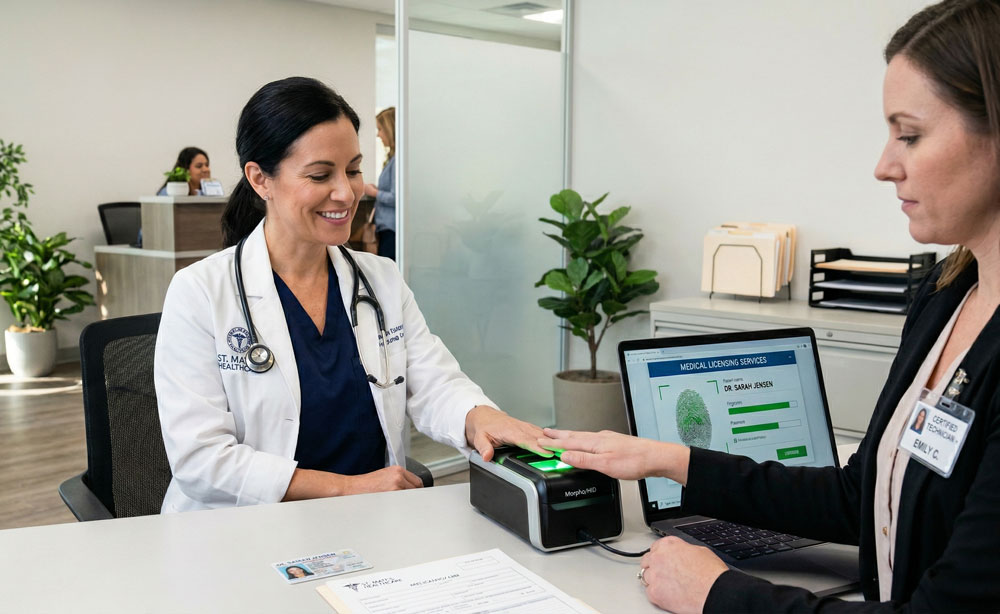
- Fingerprint Capture: A certified technician collects the fingerprints using an approved method.
- Submission: The fingerprints are sent to the relevant authorities for background checks.
- Review: The results are examined, and any issues are resolved before final approval.
Knowing these steps helps healthcare providers navigate the licensing process smoothly.
What Are the State and Federal Requirements for Medical Licensing Background Checks?
State and federal requirements for medical licensing background checks can vary widely. Generally, these checks must follow the Fair Credit Reporting Act (FCRA) and other applicable laws. Healthcare providers need to be aware of the specific rules in their state, as some states require additional checks or paperwork.
The complexity of medical licensing is also highlighted by international studies showing significant differences in regulatory standards across countries.
How Do Multi-State Licensing Background Checks Work?
Multi-state licensing background checks involve reviewing an individual’s history across different states. This is important for healthcare providers who work in multiple states, ensuring they meet each state’s licensing requirements. Providers must submit their fingerprints and other information to each state’s licensing board, which then performs the necessary checks.
What Recent Regulatory Updates Affect Fingerprinting and Credentialing?
Recent regulatory changes have highlighted the need for timely and accurate background checks in healthcare. New laws may require more frequent background updates or the use of advanced fingerprinting technologies. Staying up to date with these changes is essential for healthcare providers to remain compliant and protect their patients.
How Long Do Medical Background Checks and Fingerprinting Services Take?
The time it takes to complete medical background checks and fingerprinting services can vary depending on factors such as the complexity of the check and the processing agency’s speed. Usually, background checks take anywhere from a few days to several weeks.
What Factors Influence Turnaround Times for Healthcare Background Screening?
Several things can affect how long background screening takes, including:
- Volume of Requests: A high number of applications can slow down processing.
- Completeness of Information: Missing or incomplete information can cause delays.
- State Regulations: Processing times vary by state, depending on each state’s rules.
Knowing these factors helps healthcare providers plan more effectively and avoid unnecessary delays.
How Can Expedited Processing Benefit Healthcare Providers?
Expedited processing options are available for providers who need background checks done quickly. This is especially helpful when hiring urgently, allowing organizations to bring on qualified professionals without sacrificing safety. While expedited services may cost more, the benefits of faster hiring often outweigh the extra expense.
What Are the Costs and Coverage Options for Fingerprinting Services with Nationwide Medical Licensing?
Fingerprinting service costs vary by method used and the provider’s location. Nationwide Medical Licensing offers competitive pricing for comprehensive fingerprinting services tailored specifically for healthcare providers.
How Does Nationwide Medical Licensing Ensure Comprehensive Service Coverage?
NML partners with various agencies and leverages advanced technology to streamline fingerprinting. Our services are designed to meet the diverse needs of healthcare organizations nationwide, providing reliable, timely solutions.
What Pricing Models Are Available for Credentialing Background Verification?
Our pricing includes a setup fee, storage fee, and pricing based on the number of checks requested. This allows healthcare organizations to select the option that best fits their budget and operational needs.
Introducing Nationwide Medical Licensing’s Fingerprinting Services
NML is simplifying one of the most time-consuming parts of provider onboarding and multi-state licensure: fingerprinting. Our innovative Fingerprint Storage & Reprinting Service lets providers complete fingerprinting just once, securely store their prints, and reuse them for future state licensure applications. This approach saves time, reduces delays, and eliminates the hassle of repeat appointments.
Traditionally, providers have had to complete new fingerprint cards for every state application. These repeated appointments slow onboarding, frustrate providers and internal teams, and delay expansion across multiple states.
One-Time Fingerprinting with Ongoing Efficiency
With Nationwide Medical Licensing’s Fingerprint Storage & Reprinting Service, providers are fingerprinted once, and their prints are securely stored for future use. When a new state application requires fingerprints, NML prints the cards in-house quickly and in full compliance with regulations.
How It Works
One-Time Setup
Fingerprinting can be completed either at a digital fingerprinting location near the provider or by mailing hard card fingerprints to NML’s office. NML coordinates the entire process directly with the provider.
- There is a $40 one-time setup fee per provider.
Secure Storage
Fingerprints are securely stored by a trusted third-party partner.
- There is a $50 annual storage fee per provider.
On-Demand Reprints
When fingerprints are needed for a state application, NML prints the cards in-house.
- There is a $5 fee per set of fingerprint cards.
Why Teams Love It
- Eliminates repeat fingerprint appointments
- Reduces licensing delays
- Streamlines multi-state licensure
- Improves provider experience
- Saves time for internal teams
This service is especially valuable for organizations onboarding providers across multiple states or planning future expansion.
Built for Growing Licensing Needs
Whether you’re managing ongoing licensure, rapid provider onboarding, or future state expansion, Nationwide Medical Licensing’s Fingerprint Storage & Reprinting Service offers a scalable, cost-effective way to plan ahead and keep things running smoothly.
Fingerprint with Nationwide Medical Licensing
Ensuring thorough medical licensing background checks and efficient fingerprinting services is essential for maintaining a safe and compliant healthcare environment. Nationwide Medical Licensing offers innovative solutions that simplify these processes, saving time and reducing administrative burdens. To experience streamlined licensing and credentialing support tailored to your organization’s needs, contact Nationwide Medical Licensing today and take the first step toward hassle-free provider onboarding and multi-state licensure.